Grooming has a vocabulary, and nobody hands owners a dictionary. You ask for a teddy-bear cut, the groomer asks how long on the body and whether you want the face round or square, and both of you leave slightly unsure the other understood. Most disappointing haircuts are vocabulary failures, not skill failures, which makes them easy to prevent.
This guide translates the common terms used in Monroe salons, kennel cut, lamb cut, breed standard, teddy bear, and explains how to describe the cut you actually want in measurements and reference points a groomer can act on.
The core terms, translated
A breed standard cut follows the pattern set for that breed for the show ring: the poodle's clean face and feet with shaped jacket, the schnauzer's beard and furnishings, the cocker's long skirt. It is the highest-maintenance option, takes the longest, and suits owners who brush daily and love the look. Many pet owners admire it in photos and abandon it within two grooms, which is fine, as long as the decision is informed.
A kennel cut is the opposite pole: one practical length all over the body, short and even, with the face and feet tidied. It is the lowest-maintenance haircut a groomer offers and the usual answer for matted coats, active outdoor dogs, and owners who want maximum time between appointments. Despite the plain name, a well-done kennel cut looks neat and deliberate.
A lamb cut sits between them: the body is clipped shorter while the legs are left noticeably fuller and blended, like a lamb's woolly legs. It gives shape without show-ring upkeep. The teddy-bear cut, the most requested and least standardized term of all, means a rounded, plush look: a fuller face shaped round, ears blended in, and a body length the owner chooses. Because no two salons define it identically, it is the cut most worth describing in detail.

How to describe the cut you want
Length is a number, not an adjective. Groomers work in clipper blade and comb lengths measured in fractions of an inch, so short is ambiguous and half an inch is precise. If you do not know the length, point to a spot on the dog and say how much should remain, or bring the measurement from your last good cut; good salons record it on the dog's card.
Then describe the three zones separately, because that is how groomers build a cut: body length, leg fullness, and head shape. Saying shorter body, full legs, round face, ears to the chin gives a complete instruction. A photo of your own dog after a cut you loved is the single best reference; a photo of a show dog or a different breed sets up disappointment, since coat type limits what any cut can do.
- Name the overall style family first: breed standard, lamb, kennel, or teddy bear, so you and the groomer start in the same neighborhood.
- Give the body length as a measurement or by showing how much hair should remain between your fingers.
- Specify the legs: same length as the body, or fuller and blended, and whether feet should be clean and short or left fluffy.
- Describe the head: round or square face, beard kept or removed, ears trimmed to the leather or left long, topknot or flat top.
- State the tail: full plume, trimmed flag, or clipped to match the body.
- Confirm the plan back in the groomer's words before you leave, and ask them to note the lengths on your dog's record for next time.
Where the professional line sits
Owners can help most cuts last by brushing and combing at home and by not attempting pattern work with home clippers on a moving dog. The shaped blending that makes a lamb or teddy-bear cut look intentional, rather than stepped, is scissor work over a fully dried, straightened coat; it is very hard to reproduce in a bathroom, and fixing a home attempt usually means going shorter than either of you wanted.
Bring the vocabulary and a photo, and let the salon handle the execution. At Dana's Pampered Pets, as at most salons, the check-in conversation is where the cut is really decided, so give it two unhurried minutes.
Common questions
What is the difference between a puppy cut and a teddy-bear cut?
In most salons they mean nearly the same thing: a uniform, plush, practical cut. Neither is a defined standard, so always confirm length and face shape rather than relying on the name.
Why did the same cut name look different at another salon?
Because names like teddy bear are conventions, not specifications. Lengths recorded on your dog's card and a photo of the result you liked travel between salons far better than the name does.
Can any breed get a breed standard cut?
The standard cut belongs to its breed's coat and structure. A groomer can borrow elements, like a schnauzer-style beard on another terrier, but the full pattern only reads correctly on the breed it was designed for.
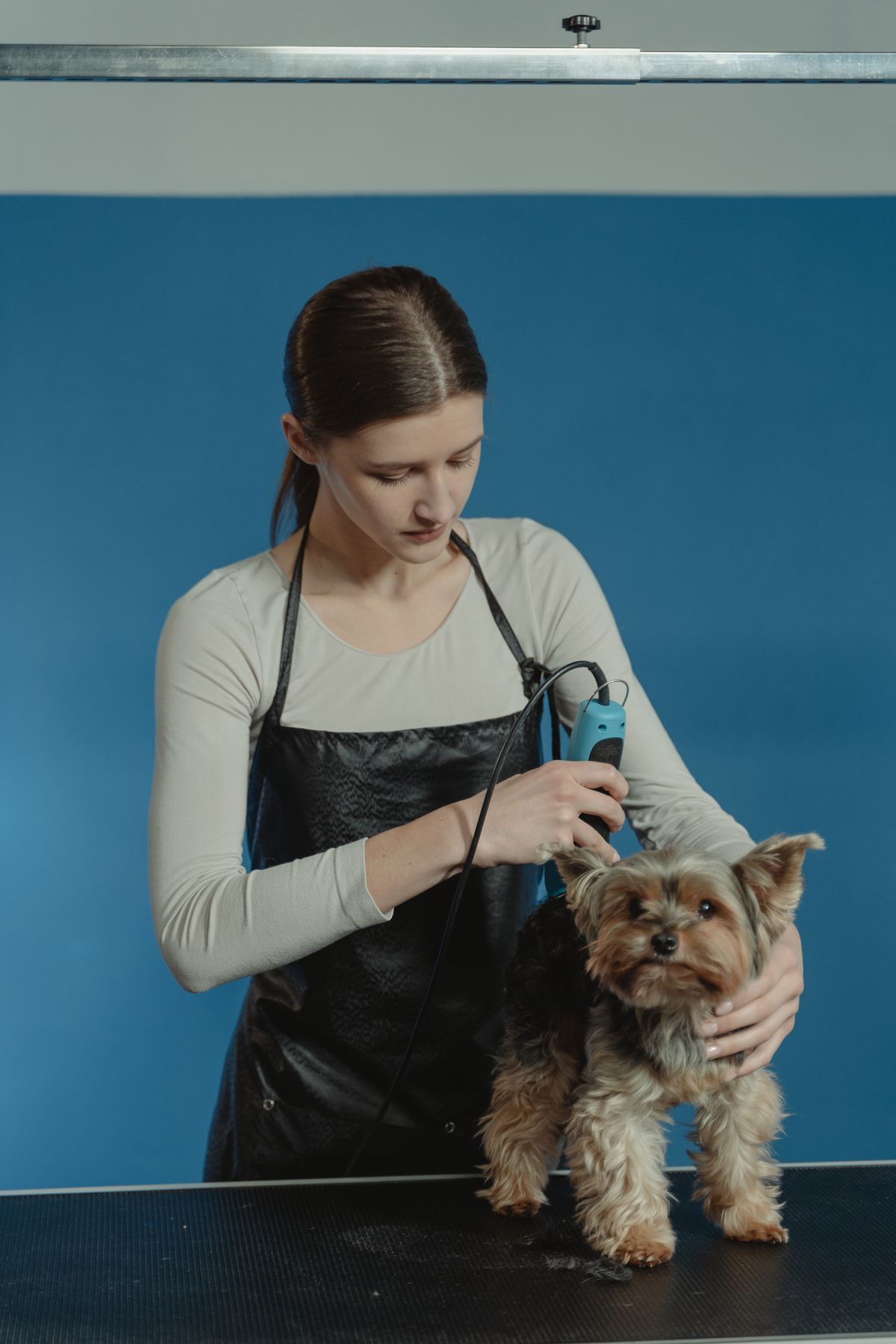
Photos in this guide are representative stock images.
← All guides from Dana's Pampered Pets← Back to Dana's Pampered Pets